How to Find Unnecessary Expenses: A Money-Leak Audit
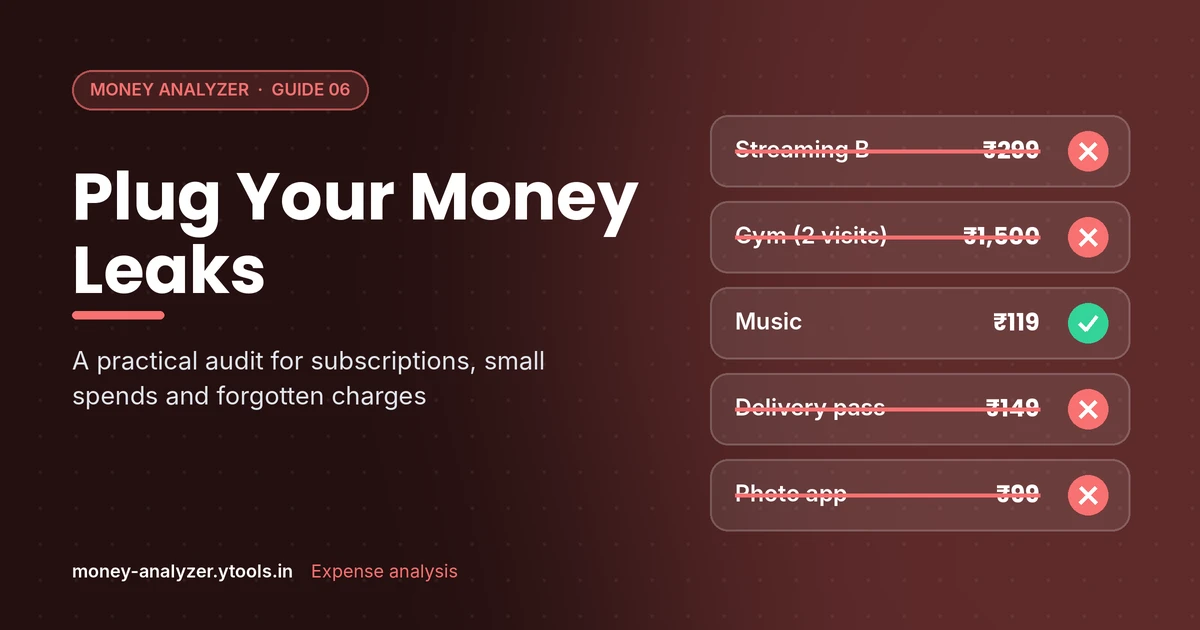
Unnecessary expenses rarely look unnecessary at the time. A ₹99 app, a ₹149 delivery membership, a gym you meant to use. Individually they're small and easy to ignore. Together, and over a year, they add up.
This guide gives you a structured audit for finding them, a simple formula for judging value, and a worked example.
What counts as an "unnecessary" expense?
Not every discretionary spend is unnecessary. Dinner with friends might be one of the best things you spend money on. An expense is unnecessary when its cost is clearly higher than the value you get from it, usually because:
- You've forgotten about it (auto-renewals, old subscriptions)
- You rarely use it (low cost per use)
- It duplicates something else you already pay for
- It's a fee or penalty you could avoid
- It's a habit you wouldn't choose if you thought about it
Only you can judge value. The audit's job is to make each expense visible so you can decide.
Six places money leaks usually hide
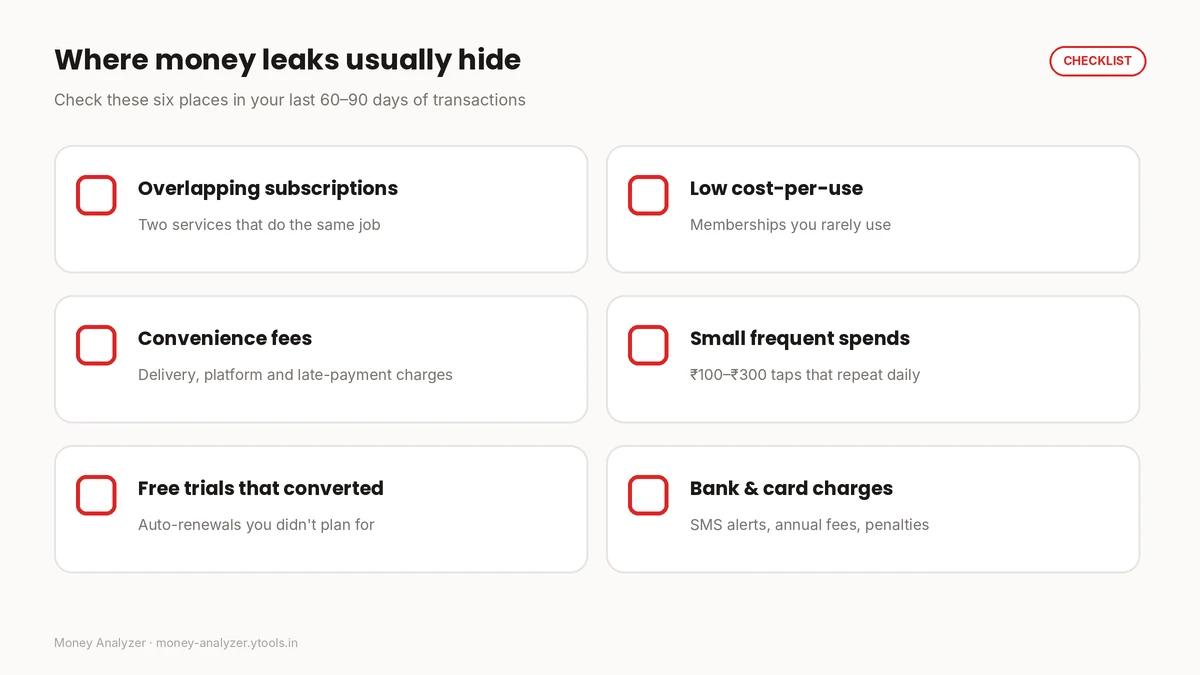
- Overlapping subscriptions: two streaming or cloud services doing the same job.
- Low cost-per-use memberships: gyms, clubs, premium plans you rarely use.
- Convenience fees: delivery, platform, packaging and late-payment charges.
- Small frequent spends: ₹100–₹300 taps that happen almost daily.
- Free trials that converted: auto-renewals you never decided on.
- Bank and card charges: SMS alert fees, annual card fees, minimum-balance penalties.
The audit, step by step
- Pull 60–90 days of transactions. Three months catches quarterly charges and repeats.
- List every recurring payment (same merchant, similar amount, regular interval).
- List every fee (search descriptions for "fee", "charge", "penalty", "GST on charges").
- Total your small frequent spends by category, e.g. all delivery orders.
- Calculate cost per use for memberships and subscriptions (below).
- Mark each item Keep, Review or Cancel.
- Act on the Cancels this week, and set a reminder to revisit the Reviews in a month.
Cost per use: the key formula
textCost per use = Monthly cost ÷ Number of uses per month
Annual cost  = Monthly cost × 12
A ₹1,500 gym membership used 12 times a month costs ₹125 per visit. Used twice, it costs ₹750 per visit. Same price, very different value.
Example: a subscription audit
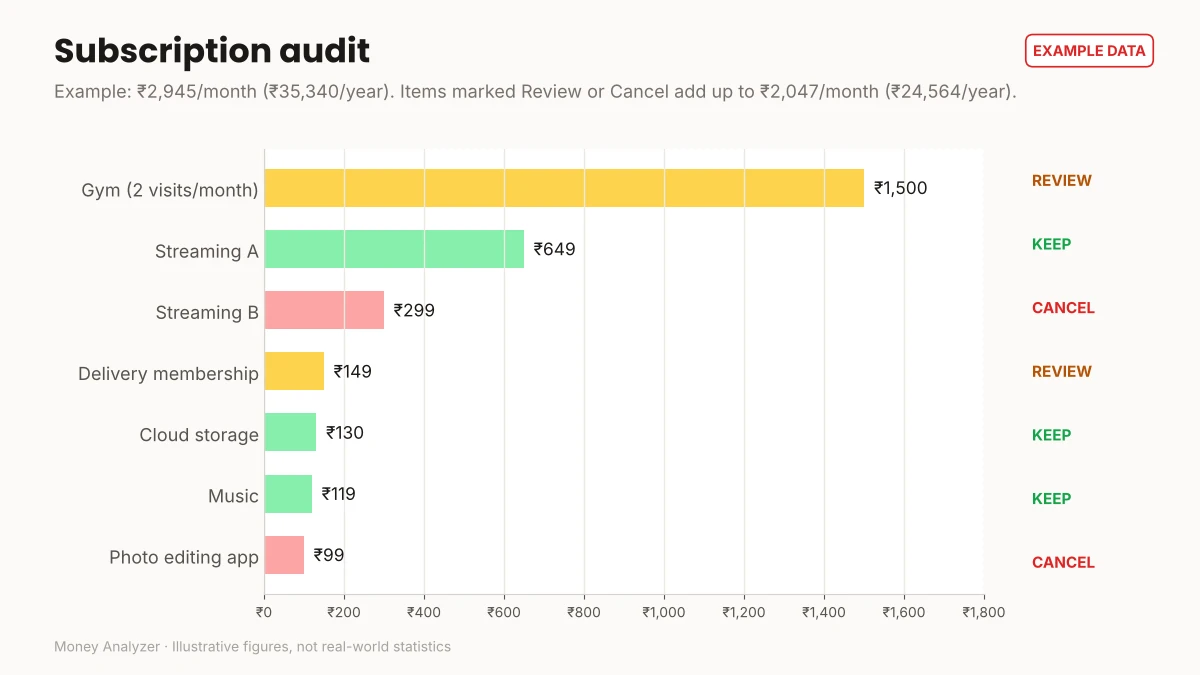
Example. The numbers below are illustrative, not real-world statistics.
Meera listed every subscription from her last three statements:
| Subscription | Monthly | Annual | Use / notes | Decision |
|---|---|---|---|---|
| Streaming A | ₹649 | ₹7,788 | Watched weekly | Keep |
| Streaming B | ₹299 | ₹3,588 | Overlaps with A; not opened in 2 months | Cancel |
| Music | ₹119 | ₹1,428 | Daily commute | Keep |
| Cloud storage | ₹130 | ₹1,560 | Phone backups | Keep |
| Gym | ₹1,500 | ₹18,000 | 2 visits last month → ₹750/visit | Review |
| Delivery membership | ₹149 | ₹1,788 | Saves fees only if ordering often | Review |
| Photo editing app | ₹99 | ₹1,188 | Free trial that converted; unused | Cancel |
| Total | ₹2,945 | ₹35,340 |
The calculations
textMonthly total          = 649 + 299 + 119 + 130 + 1,500 + 149 + 99 = ₹2,945
Annual total           = ₹2,945 × 12 = ₹35,340
Review + Cancel items  = 299 + 1,500 + 149 + 99 = ₹2,047 per month
Annualised             = ₹2,047 × 12 = ₹24,564
Gym cost per visit     = ₹1,500 ÷ 2 = ₹750
What Meera learns: the ₹2,047 isn't automatic savings. Two items are "Review", not "Cancel". But it shows where to look. Cancelling Streaming B and the unused app is easy (₹398/month). The gym needs an honest decision: commit to using it, switch to a pay-per-visit option, or cancel.
Keep, Review or Cancel: how to decide
| Mark it… | When |
|---|---|
| Keep | You use it regularly and would sign up again today at this price |
| Review | You might use it more, or a cheaper plan exists. Set a 30-day check |
| Cancel | You'd forgotten it, it duplicates something, or you wouldn't sign up again |
The test that works for most people: "Would I sign up for this today, at this price?"
Common mistakes
- Cutting things you genuinely value just because they're discretionary.
- Only checking one month. Quarterly and annual charges get missed.
- Forgetting to actually cancel. Mark it, then do it the same week.
- Ignoring fees because each one is small.
- Clicking "cancel" links in unexpected emails or SMS. Cancel only inside the official app or website. RBI's public awareness material on fraud warns about exactly these kinds of messages.
How Money Analyzer can help
Money Analyzer tracks your expenses by category and charts them, which makes recurring and small frequent spends easier to spot. Put subscriptions in their own category (see Expense Categories) and they'll show up clearly every month. Review the privacy policy before entering financial information.
Frequently asked questions
How do I identify unnecessary expenses?
Review 60–90 days of transactions, list every recurring payment and fee, total your small frequent spends, calculate cost per use for memberships, and mark each item Keep, Review or Cancel.
What are common unnecessary expenses?
Unused or overlapping subscriptions, rarely used memberships, delivery and convenience fees, late-payment charges, converted free trials and avoidable bank charges are among the most common.
How do I calculate cost per use?
Divide the monthly cost by how many times you used it that month. A ₹600 subscription used 3 times costs ₹200 per use.
How often should I audit my expenses?
A full audit every three to six months, plus a quick look at new recurring charges each month.
Is cutting small expenses worth it?
It depends on how often they repeat. Multiply by frequency and by 12 to see the annual cost, then decide whether the value is worth it to you.
Should I cancel all subscriptions?
No. Keep the ones you use and value. The goal is to pay only for things you'd choose again today.
Conclusion
Unnecessary expenses hide in recurring payments, fees and small repeats. Pull 60–90 days of data, list them, calculate cost per use, and decide Keep, Review or Cancel. Then act the same week. For the wider monthly routine, see How to Analyze Your Monthly Expenses; for the behaviour behind repeat spends, see How to Analyze Your Spending Habits.
Find your leaks: review last month's spending in Money Analyzer.
This article is general educational information, not personalised financial advice.
Sources: Consumer Financial Protection Bureau, Your Money, Your Goals toolkit · Reserve Bank of India, BE(A)WARE booklet release on modus operandi of financial frauds
Related Posts
How to Analyze Bank Statement Spending Safely
Learn to read bank and UPI statements, categorize transactions, and analyze your spending, while keeping OTPs, PINs and account details private.
Read More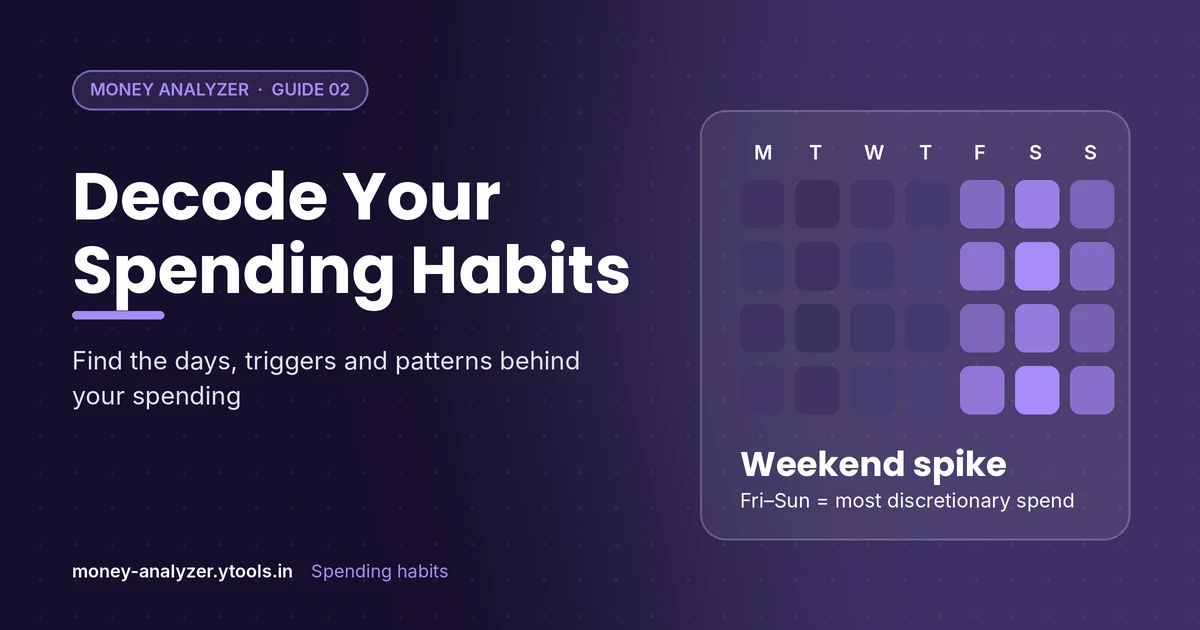
How to Analyze Your Spending Habits: Find Your Patterns
Learn how to analyze your spending habits by looking at frequency, timing and triggers. Includes a worked ₹ example and a simple habit-review method.
Read More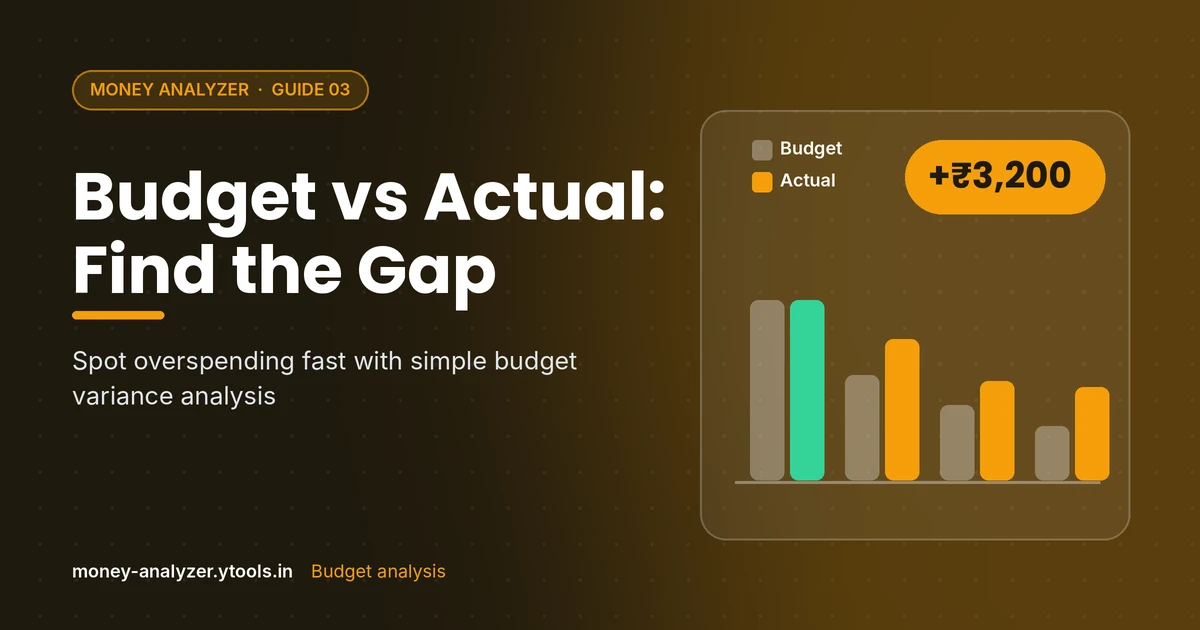
Budget vs Actual Spending: How to Analyze the Gap
Compare your budget with actual spending, calculate variance in ₹ and %, and decide what to change. Includes a worked example with every formula shown.
Read More