Expense Tracking vs Expense Analysis: The Difference
Plenty of people track every rupee for weeks, then stop, because the log never seemed to change anything. The problem usually isn't the tracking. It's that tracking was treated as the goal instead of the first step.
This guide explains the difference between expense tracking and expense analysis, why you need both, and a short monthly routine that connects them.
Definitions
Expense tracking is recording each transaction: date, amount, what it was for. The output is a list (a ledger).
Expense analysis is turning that list into understanding: grouping by category, totalling, comparing against last month or a budget, and deciding what to change. The output is a decision.
Side-by-side comparison
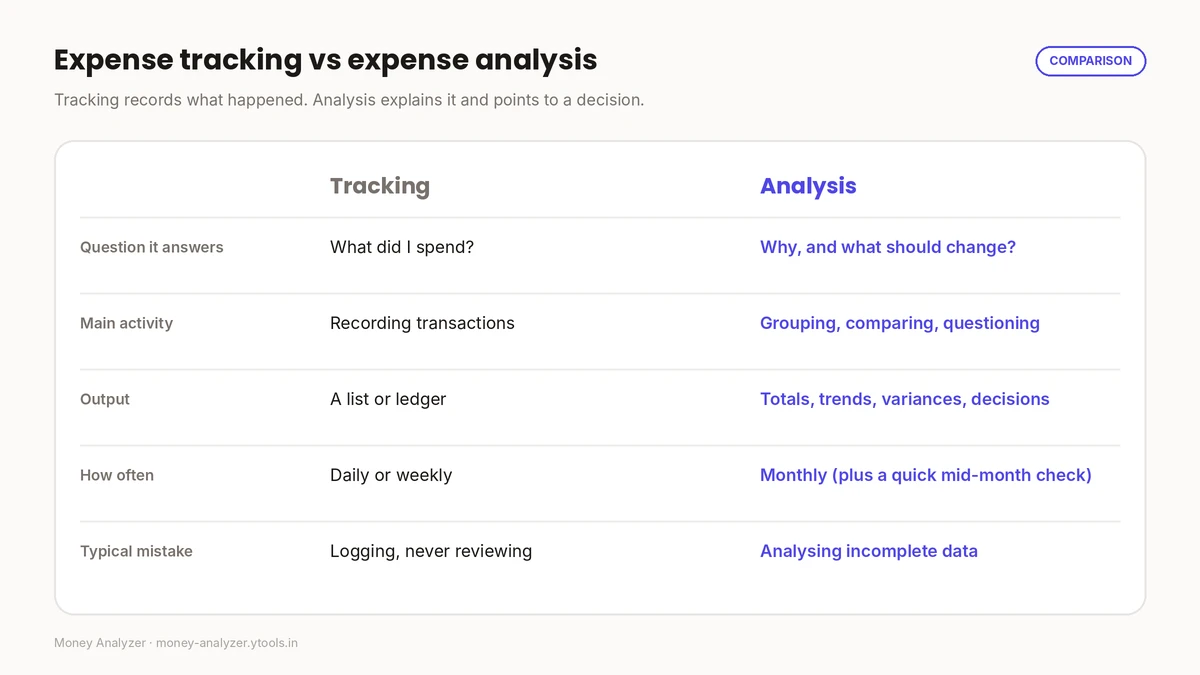
| Expense tracking | Expense analysis | |
|---|---|---|
| Question it answers | What did I spend? | Why, and what should change? |
| Main activity | Recording transactions | Grouping, comparing, questioning |
| Output | A list or ledger | Totals, trends, variances, decisions |
| How often | Daily or weekly | Monthly, plus a quick mid-month check |
| Typical mistake | Logging but never reviewing | Analysing incomplete data |
Same data, two views
Example. The numbers below are illustrative, not real-world statistics.
Tracking view (part of a month's log):
text03 Sep  Delivery order        ₹420
04 Sep  Groceries           ₹1,850
05 Sep  Delivery order        ₹380
06 Sep  Metro card top-up     ₹500
06 Sep  Delivery order        ₹510
07 Sep  Movie tickets         ₹600
...
Analysis view (the full month, summarised):
textFood delivery:   14 orders · ₹6,020 total · ₹430 average · up from 9 orders last month
Groceries:       ₹7,400 · roughly flat vs last month
Transport:       ₹2,100 · flat
Finding:         Delivery orders rose by 5 (14 vs 9); that's where the month's increase came from
Decision:        Plan two extra home-cooked dinners per week next month
textAverage order = ₹6,020 ÷ 14 = ₹430
The log is accurate and complete, yet it's the summary that makes the pattern (and the decision) obvious.
The five-stage pipeline
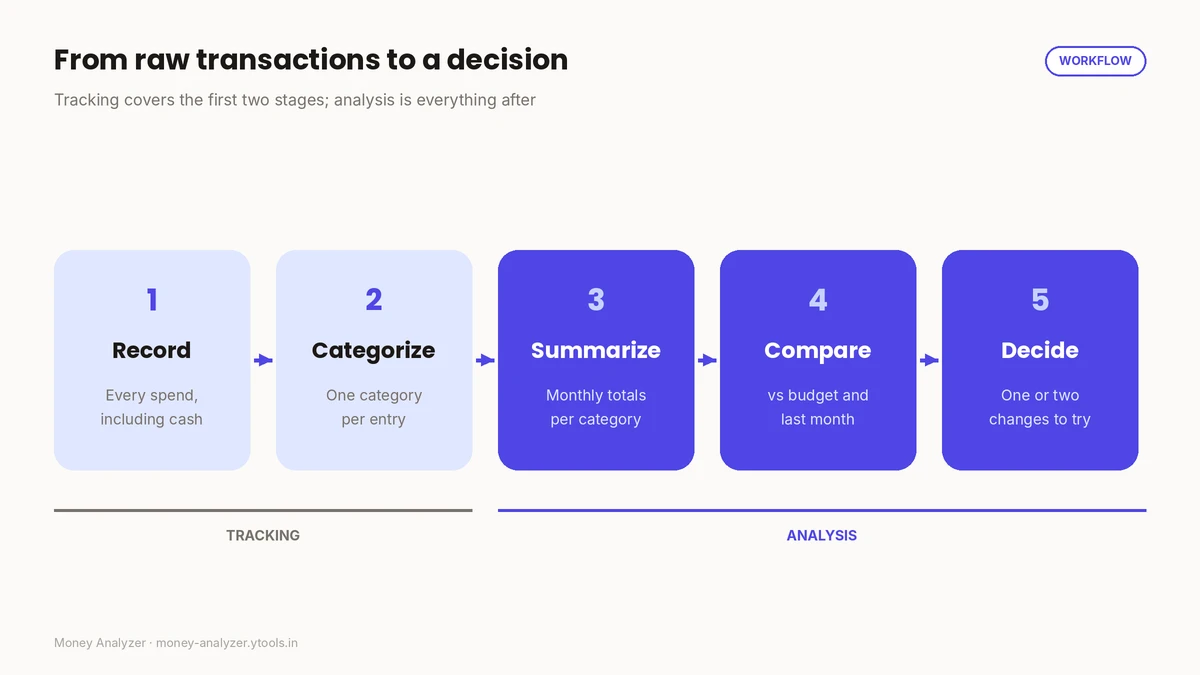
- Record: every spend, including cash.
- Categorize: one category per entry, by purpose (Expense Categories has a ready-made list).
- Summarize: monthly totals per category.
- Compare: against your budget and last month.
- Decide: one or two specific changes to try.
Tracking covers stages 1–2. Analysis is stages 3–5. Stopping after stage 2 is why tracking so often feels pointless.
Why people track but never analyze
- No scheduled review. Without a fixed time, the review never happens.
- The log is too messy to summarise (inconsistent categories, missing entries).
- No comparison point. Without last month or a budget, totals have no context.
- Analysis feels like accounting. It doesn't need to be; five numbers are enough.
A 20-minute monthly routine
Pick a fixed day, such as the first weekend of the month.
- (5 min) Check the month's log is complete; add any missing cash or card purchases.
- (5 min) Fix uncategorized or mis-categorized entries.
- (5 min) Look at category totals and compare with last month and your budget.
- (5 min) Write down one finding and one change for next month.
That's it. The full method is in How to Analyze Your Monthly Expenses.
Tracking habits that make analysis easier
- Record by purpose, not merchant ("groceries", not just the store name).
- Add a short note for anything unusual ("birthday gift", "car repair") so one-offs are easy to separate from habits.
- Don't record transfers as spending (to your own savings, or credit card bill payments).
- Keep categories stable month to month.
- Never store credentials in your tracker. Passwords, PINs, OTPs and card numbers aren't needed for tracking or analysis. See How to Analyze Bank Statement Spending Safely.
How Money Analyzer can help
Money Analyzer is a free tool to track expenses, manage budgets and analyze spending with charts, so tracking and analysis happen in the same place. Review the privacy policy before entering financial information.
Frequently asked questions
What is the difference between expense tracking and expense analysis?
Tracking records what you spend. Analysis groups, totals and compares that spending to explain what happened and decide what to change.
Is expense tracking enough on its own?
Usually not. A log without a regular review rarely changes behaviour. Adding a short monthly analysis is what turns the data into decisions.
How often should I track vs analyze?
Track as you spend (or at least weekly). Analyze monthly, with an optional quick mid-month check.
Do I need to track every small expense?
For analysis to be reliable, yes, as far as practical. Small frequent spends are often where patterns hide. Estimates for cash are better than gaps.
What's the best way to start expense analysis?
Take one complete month of tracked expenses, total each category, compare with the previous month, and write down one change to try.
Conclusion
Tracking gives you the facts. Analysis gives you the meaning. Keep tracking simple and consistent, then spend twenty minutes a month turning the log into one finding and one change.
Do both in one place: start with Money Analyzer.
This article is general educational information, not personalised financial advice.
Sources: Consumer Financial Protection Bureau, Your Money, Your Goals toolkit · Minnesota Department of Commerce, Spending & saving
Related Posts
How to Analyze Bank Statement Spending Safely
Learn to read bank and UPI statements, categorize transactions, and analyze your spending, while keeping OTPs, PINs and account details private.
Read More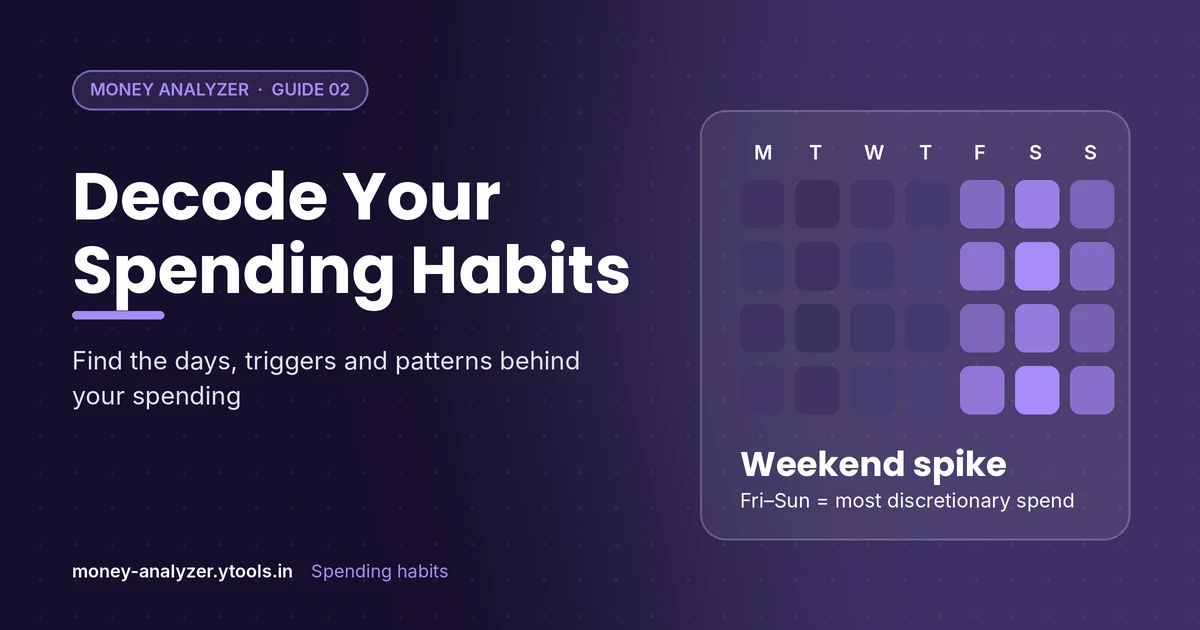
How to Analyze Your Spending Habits: Find Your Patterns
Learn how to analyze your spending habits by looking at frequency, timing and triggers. Includes a worked ₹ example and a simple habit-review method.
Read More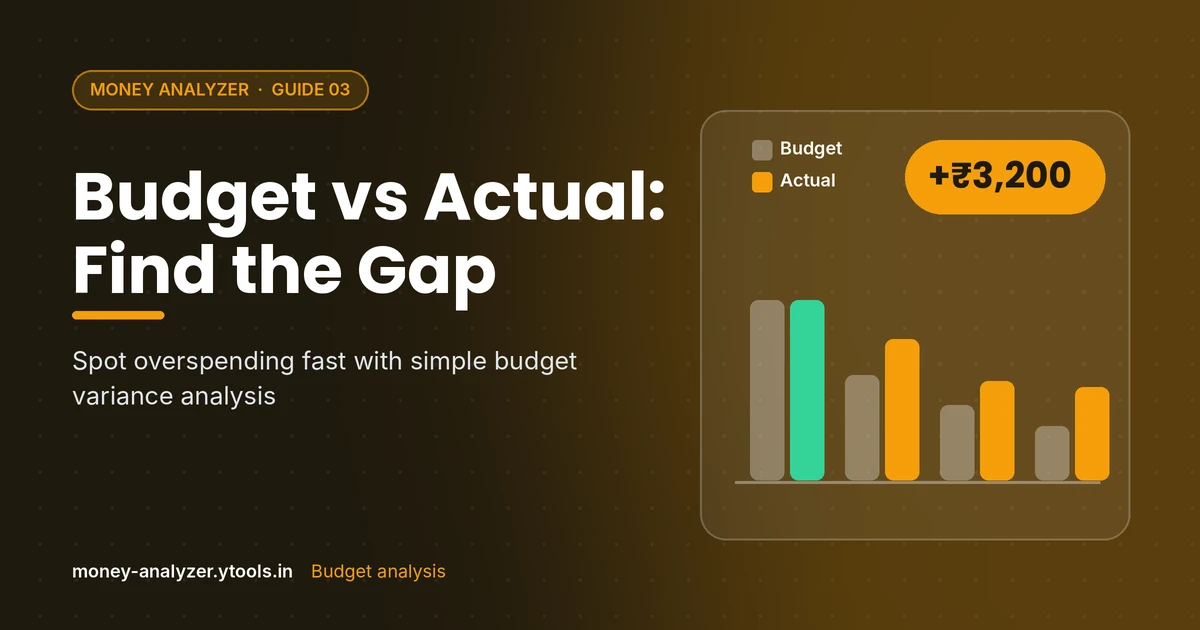
Budget vs Actual Spending: How to Analyze the Gap
Compare your budget with actual spending, calculate variance in ₹ and %, and decide what to change. Includes a worked example with every formula shown.
Read More